Battersea Surveyors receives this question almost every day: should I get a Level 2 or a Level 3 survey? It's one of the most important decisions you'll make when buying a property — and it's often misunderstood. In this guide, we'll give you a straightforward answer based on years of surveying properties across London.
"Think of it this way. A Level 2 is like a comprehensive health check. A Level 3 is like going to a specialist. Both have their place — it depends on the property, not your budget." — James Hartley, Senior Surveyor, Battersea Surveyors
What is a Level 2 HomeBuyer Report?
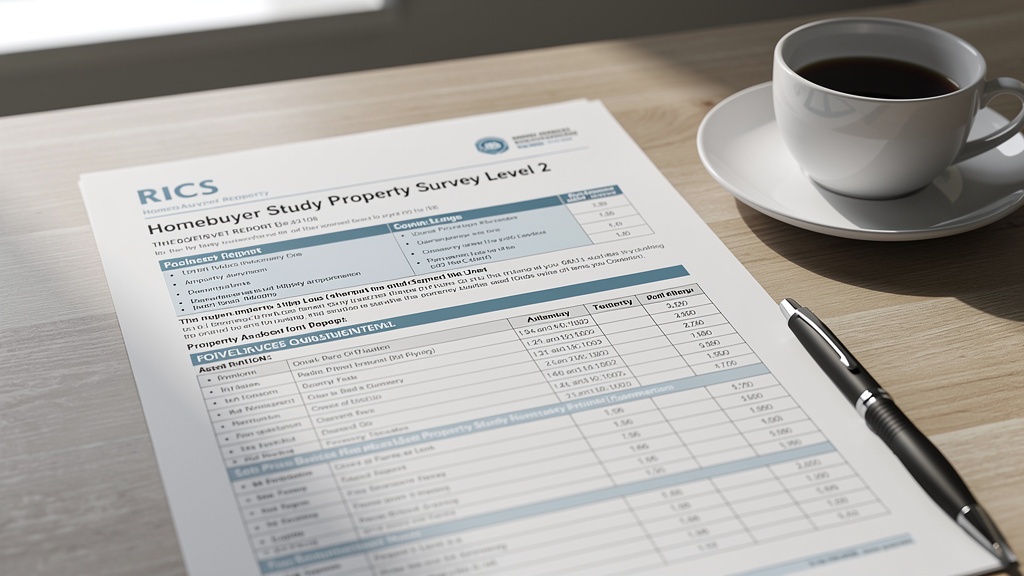
The RICS Level 2 HomeBuyer Report (often simply called a homebuyer survey) is a mid-level property inspection. It was redesigned by RICS in 2021 to give buyers a clearer, more useful document.
Using a traffic-light system, your surveyor rates the condition of each part of the property:
- Condition 1 (Green): No repair needed right now
- Condition 2 (Amber): Defects to watch or repair in due course
- Condition 3 (Red): Significant defects requiring urgent attention
The report also includes a market valuation and an insurance reinstatement figure. It's visual, relatively accessible, and provides actionable advice without overwhelming you with technical detail.
What is a Level 3 Full Building Survey?
The RICS Level 3 Full Building Survey — formerly known as a structural survey — is the most comprehensive residential property inspection available. It goes considerably further than a Level 2, investigating the structure in depth and providing detailed advice on how to deal with any defects found.
A Level 3 survey typically runs to 50–80 pages and covers everything from roof structure to subfloor ventilation, from drainage to damp. Your surveyor will also provide advice on what repairs are needed, in what order, and roughly what they might cost.
I recently surveyed a 1900 terrace in Battersea for a client who'd been advised by their mortgage broker to "just get the basic survey." The Level 3 inspection revealed three separate active areas of damp, a poorly supported chimney breast, and a first-floor beam that had been partially cut when the previous owner installed underfloor heating. None of this would have been picked up in a Level 2 inspection. The repair bill? Estimated at £38,000.
The Key Differences at a Glance
| Feature | Level 2 HomeBuyer Report | Level 3 Full Building Survey |
|---|---|---|
| Condition rating system | ✓ Traffic-light ratings | ✓ Detailed descriptions |
| Market valuation | ✓ Included | ✗ Not included (optional extra) |
| Structural investigation | Basic visible elements | In-depth structural analysis |
| Damp investigation | Surface readings | Detailed investigation and cause |
| Roof space inspection | If accessible | Full inspection where accessible |
| Defect cause analysis | ✗ Not included | ✓ Detailed cause and effect |
| Repair recommendations | General advice | Specific repair specification |
| Approximate repair costs | ✗ Not included | ✓ Indicative cost guidance |
| Best for | Post-1900 conventional properties | Older, non-standard or complex properties |
So Which Survey Do You Need?
Choose a Level 2 HomeBuyer Report if:
- The property was built after around 1900
- It's of conventional brick or block construction
- It's in a good state of repair with no obvious defects
- It's a modern flat or house that has been well maintained
- You're happy to investigate specific concerns separately
Choose a Level 3 Full Building Survey if:
- The property was built before 1900 (very common in Battersea)
- It's of non-standard construction (timber frame, concrete, etc.)
- You can see obvious defects — damp patches, cracks, sagging floors
- The property has been significantly extended or altered
- It's a listed building or in a conservation area
- You're planning significant renovation works
- The property has a complex layout or unusual features
"One question I always ask clients is: what would you regret more — spending an extra £200 on a Level 3 survey you didn't strictly need, or finding a £30,000 structural problem six months after you moved in that a Level 3 would have identified?" — James Hartley, MRICS
How Much Do Level 2 and Level 3 Surveys Cost?
Survey costs vary depending on the size, age and location of the property. As a rough guide for Battersea and South West London:
- Level 2 HomeBuyer Report: £499–£700 for most properties
- Level 3 Full Building Survey: £599–£1,200 for most properties
It sounds like a lot. But consider that the average London property purchase costs £500,000–£700,000. A survey that costs 0.1% of the property value and could save you from a £20,000+ repair bill is extraordinary value for money.
A Real-Life Example from Battersea
Sarah and Tom were buying a first-floor conversion flat in a Victorian terrace near Battersea Park. The asking price was £420,000. Their mortgage broker suggested a "basic" Level 2 survey to keep costs down.
We recommended a Level 3 survey given the property's age (built 1893) and the fact that it had clearly been converted relatively recently. The Level 3 inspection revealed:
- Active rising damp affecting the ground-floor walls (the flat shared a party wall with the ground-floor unit)
- A poorly supported timber joist over the bay window area
- The rear addition had no cavity wall insulation and signs of penetrating damp
The surveyor's estimated repair costs: £14,500. Sarah and Tom used this to negotiate a £12,000 price reduction. The Level 3 survey cost them £685. Net saving: over £11,300.
Frequently Asked Questions
Related Guides
Need a Survey in Battersea?
Our RICS surveyors will help you choose the right survey and provide a transparent, no-obligation quote.
Get a Free Quote