You've decided to get a Level 3 Full Building Survey. Good decision. But what actually happens? What does the surveyor look at, how long does it take, and what do you get in the report? This guide walks you through the whole process.
Before the Survey: What to Arrange
Once you've instructed Battersea Surveyors and we've confirmed the date, there's a few things to organise:
- Access: The surveyor needs full access to the property — all rooms, loft hatch (if present), cellar or basement, outbuildings and the exterior. Arrange this with the vendor or their estate agent.
- Keys / access: The estate agent usually arranges this. Make sure you let them know the inspection is booked.
- Loft access: If there's a loft hatch, it helps to have a stepladder available — though experienced surveyors often carry their own.
You don't need to be present, but you're welcome to attend — particularly towards the end of the inspection, when the surveyor can walk you through their initial findings verbally.
What Happens During the Inspection
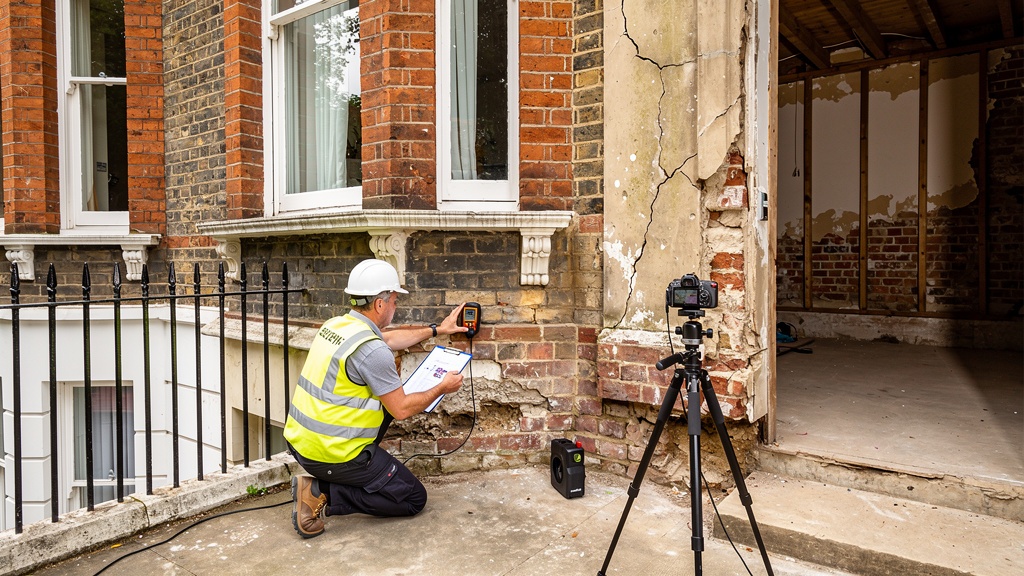
A typical Level 3 inspection on a 3–4 bedroom Victorian terrace in Battersea takes 3–5 hours. Our surveyors follow a systematic approach:
Exterior Inspection
- Condition of roof coverings, chimney stacks, flashings and gutters
- External wall condition — pointing, cracks, dampness
- Windows, doors and external joinery
- Drainage inspection (drain covers lifted where accessible)
- Outbuildings, garages and boundary structures
- Grounds drainage and hard standings
Interior Inspection
- Roof space — structure, insulation, signs of water ingress
- Every room: walls, floors, ceilings, windows
- Damp readings taken throughout
- Services assessment — boiler, electrics, plumbing (visual)
- Cellar or basement where accessible
- Structural assessment — beams, supports, load-bearing walls
What the Report Contains
The Level 3 report is a substantial document — typically 50–80 pages. It covers:
- Summary: Key findings and any urgent issues highlighted at the front
- Description: Property details, location, construction type
- Section-by-section findings: Every element assessed with a condition rating
- Defect descriptions: What was found, what caused it, what to do about it
- Repair recommendations: Prioritised into urgent, within 3 years, and maintenance
- Cost guidance: Indicative repair cost ranges (not contractor quotes)
- Further investigations: Specialist surveys recommended where needed
What to Do with the Report
Once you receive your report, don't panic — even if it contains significant findings. Here's our recommended approach:
- Read the summary first — this tells you the key issues without the detail
- Call your surveyor — we include a post-report helpline with every survey, so you can ask questions
- Get contractor quotes for any Condition 3 (urgent) issues
- Use findings to negotiate — significant defects often justify a price reduction or condition of sale
- Decide whether to proceed — occasionally, a Level 3 survey reveals issues that change your decision to buy. Better to know now than after you've exchanged.
"Every Level 3 report we produce is different — because every property is different. But the approach is always the same: thorough, objective and honest. Our job isn't to kill a sale. It's to give you the full picture so you can make the best decision for yourself."— David Warren, MRICS
Related Guides
Book a Full Building Survey
Get a comprehensive Level 3 survey from our RICS surveyors in Battersea.
Get a Free Quote